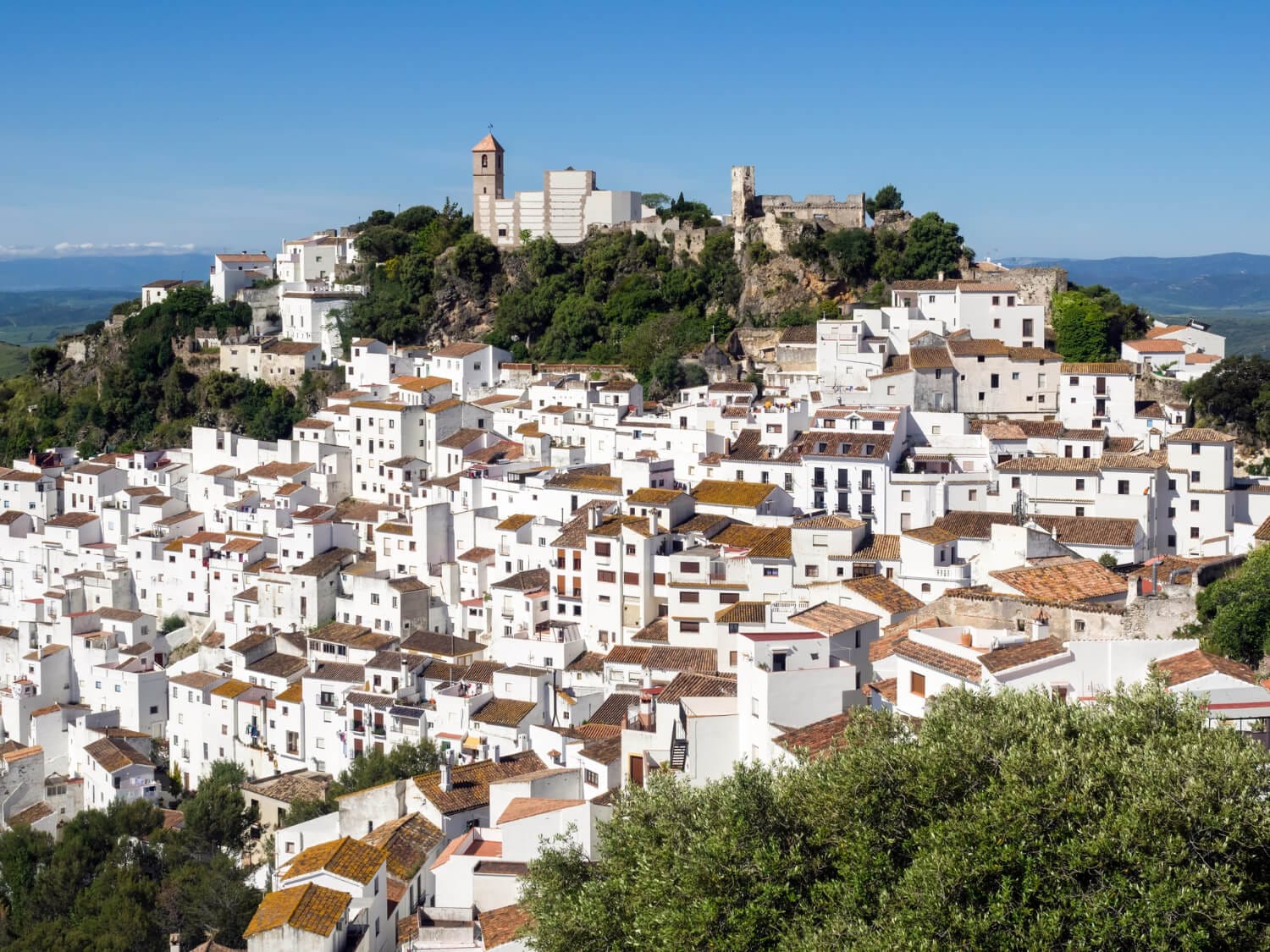
Andalusia’s pueblos blancos, or white villages, are among the most atmospheric places in southern Spain. Built on hillsides, ridges, and mountain slopes, these towns are defined by whitewashed façades designed to reflect heat, narrow streets shaped by centuries of history, and balconies overflowing with flowers. They feel timeless, slow, and deeply local — a sharp contrast to Andalusia’s busy coastal resorts and large cities.
Many travelers assume that visiting white villages requires renting a car. In reality, several of the most beautiful and culturally rich villages are well connected by public transport. Trains, regional buses, and short taxi links make it entirely possible to experience authentic Andalusian village life without driving.
This guide focuses on white villages you can realistically visit without a car, with clear transport options, realistic costs, and practical advice for planning efficient day trips or overnight stays.
Ronda – Dramatic Cliffs and Historic Bridges
Ronda is often the first white village travelers hear about — and for good reason. The town sits dramatically atop the El Tajo gorge, split in two by a deep canyon and connected by the iconic Puente Nuevo bridge. From the bridge and surrounding viewpoints, you get sweeping views of cliffs, river valleys, and distant mountains that feel almost unreal.
Ronda is one of the easiest white villages to reach without a car. Direct regional trains run from Málaga several times a day, with travel times of around 2 hours. Train tickets typically cost €15–25 one way, depending on demand and time of booking. From Seville, the journey takes around 2 hours 30 minutes, with prices usually €18–30.
Once in Ronda, everything is walkable. The old town, new town, viewpoints, and historic streets are connected by pedestrian paths. Beyond the bridge, highlights include the bullring (Plaza de Toros, one of the oldest in Spain), cliffside walks, and quiet plazas ideal for lingering over tapas.
Tip: Visit the Puente Nuevo early in the morning or around sunset. Midday crowds can be heavy, but early light over the gorge is softer and far better for photography.
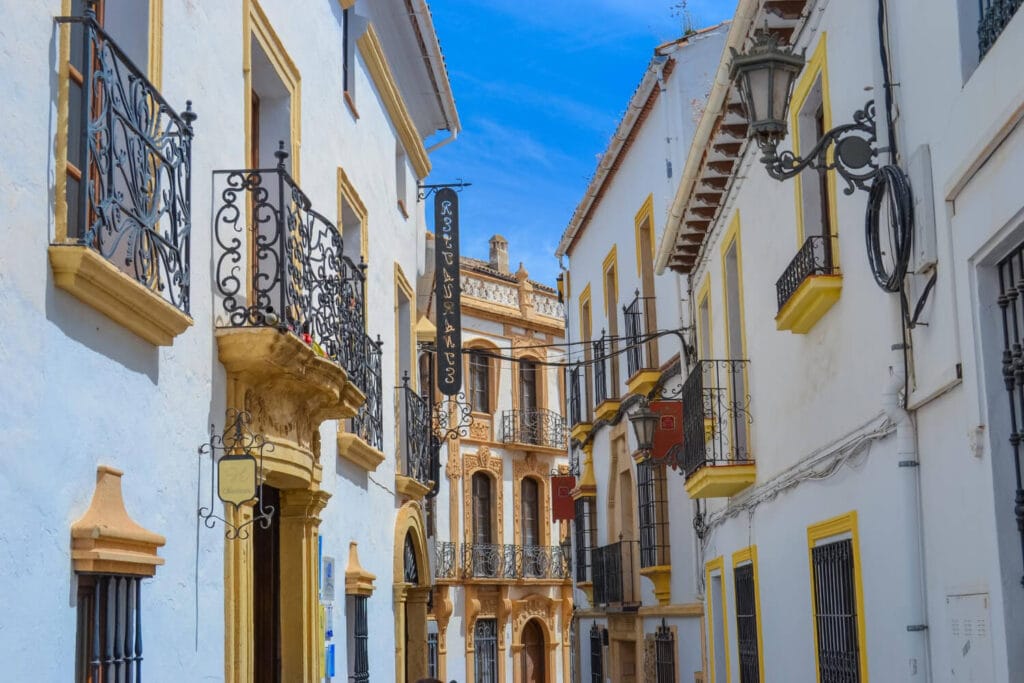
Mijas Pueblo – Hillside Charm Above the Costa del Sol
Mijas Pueblo sits high above the Costa del Sol, overlooking the Mediterranean. It’s compact, postcard-pretty, and easy to explore on foot. White houses climb the hillside, small squares open onto sea views, and cafés spill onto terraces with sweeping panoramas.
Reaching Mijas Pueblo without a car is straightforward. From Málaga, take a train or bus to Fuengirola (around €3–5). From Fuengirola, local buses run frequently up to Mijas Pueblo, with tickets costing €1.50–2.50 each way. Total travel time is usually under 1.5 hours.
The village itself is best enjoyed slowly. Wander through artisan shops, visit small chapels, and stop for coffee or lunch with a view. Because of its accessibility, Mijas Pueblo can feel busy late morning and early afternoon, especially in high season.
Frigiliana – Flowers, Tiles, and Moorish Streets
Frigiliana regularly appears on lists of the most beautiful villages in Spain, and it earns that reputation easily. Its steep streets are lined with white houses decorated with colorful flower pots and ceramic tiles that tell the story of the village’s Moorish past. The layout is maze-like, encouraging aimless wandering rather than ticking off sights.
Although Frigiliana sits inland, it’s well connected by bus. From Málaga, take a bus to Nerja (around €6–8, 1.5 hours). From Nerja, local buses run to Frigiliana in about 15 minutes, with tickets usually €1–2. Combined, it makes an easy day trip.
Frigiliana rewards those willing to climb. The higher you go, the quieter the streets become, and the views open over hills, valleys, and sometimes all the way to the coast. Small bakeries, wine shops, and family-run restaurants make it a pleasant place to spend several hours.
Tip: Walk to the uppermost streets even if the climb feels steep. Crowds thin out quickly, and the views improve with every turn.
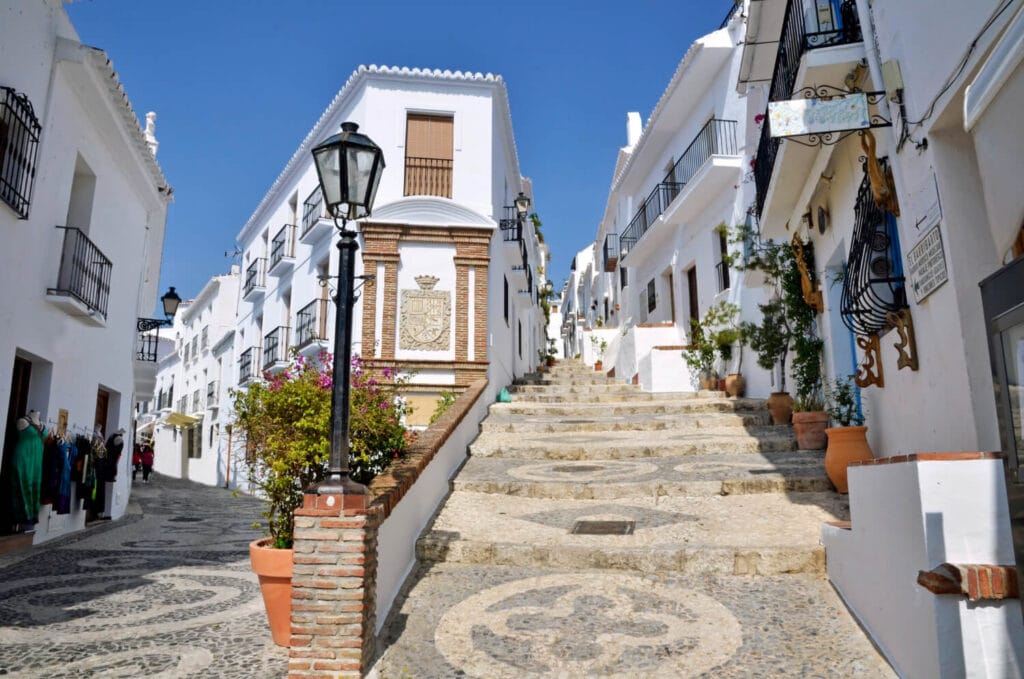
Vejer de la Frontera – Hilltop Streets and Andalusian History
Vejer de la Frontera rises above rolling countryside in Cádiz province, surrounded by olive groves and farmland. Unlike some white villages that feel heavily touristic, Vejer retains a lived-in atmosphere. Locals gather in plazas, laundry hangs from balconies, and quiet corners feel genuinely residential.
Reaching Vejer without a car takes a bit more planning, but it’s still manageable. From Cádiz or Seville, take a train to San Fernando or El Puerto de Santa María, then continue by regional bus to Vejer. Bus tickets usually cost €5–10, depending on the route. Travel time varies, but plan for around 2.5–3 hours from Seville.
Vejer’s charm lies in its details: arched gateways, hidden patios, and white streets that curve unexpectedly. Several viewpoints overlook the surrounding countryside, especially beautiful in late afternoon light.
Casares – A Dramatic Hillside Layout
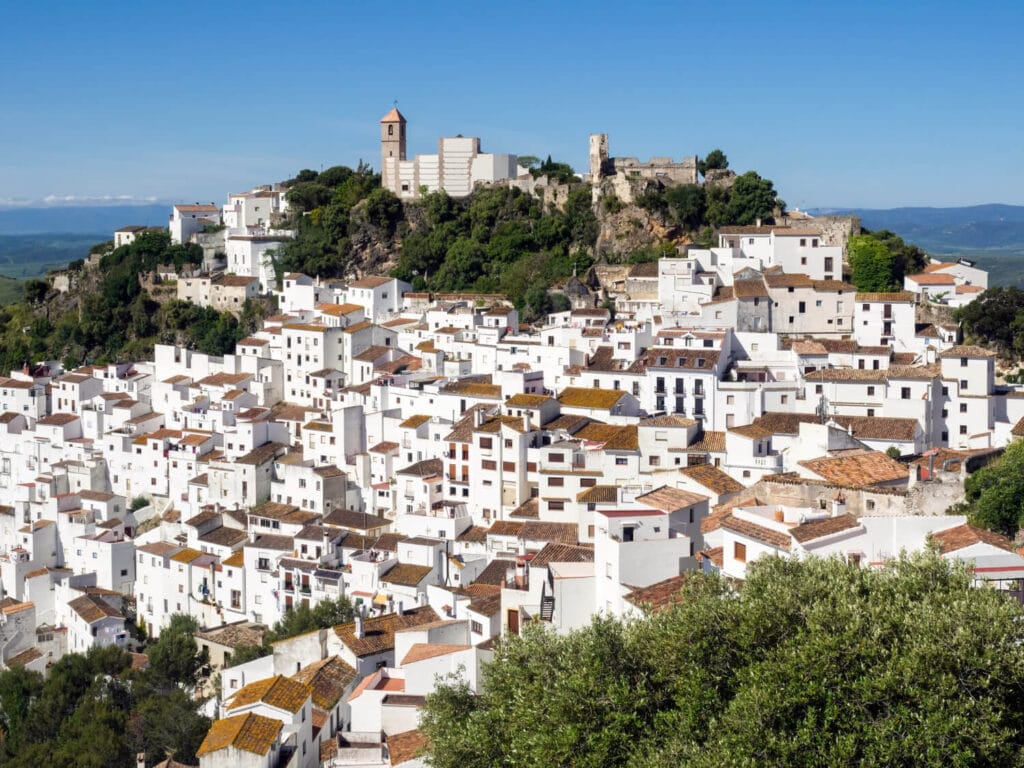
Casares is one of Andalusia’s most visually striking villages. Its white houses cascade down a steep hillside, creating a layered effect that looks spectacular from a distance. The village has strong Moorish roots, visible in its layout and remains of old fortifications.
Casares can be reached by bus from Estepona, which itself is accessible by bus from Málaga. Buses from Estepona to Casares typically cost €3–6, with travel times around 45 minutes. While service isn’t as frequent as for more tourist-heavy villages, it’s reliable enough with some planning.
Casares is ideal for travelers seeking quieter villages. Streets are steep and narrow, so comfortable walking shoes are essential. In return, you’ll find peaceful plazas, panoramic viewpoints, and a slower pace that feels far removed from the coast below.
How to Explore White Villages Without a Car
Visiting Andalusia’s white villages without a car requires a slightly different mindset, but it’s entirely achievable with smart planning. The key is to focus on villages with reliable connections and to accept a slower, more deliberate rhythm of travel.
Regional buses are the backbone of rural transport in Andalusia. Prices are affordable, usually €1–10 per journey, but schedules can be limited, especially on weekends or holidays. Checking timetables a day or two in advance is essential.
Choosing a base city makes planning easier. Málaga, Seville, and Cádiz all offer strong transport links to nearby villages. From Málaga, you can easily reach Ronda, Mijas Pueblo, Frigiliana, and Casares. Seville works well for Ronda and Vejer, while Cádiz is ideal for exploring villages in Cádiz province.
Guided day tours are another option for travelers who want convenience. Prices typically range from €60–120 per person, often including transport and a guide but not meals. While less flexible, they remove logistical stress and work well for tight schedules.
Why White Villages Are Worth the Effort
White villages reveal a side of Andalusia that large cities and beach resorts can’t fully show. They offer insight into traditional architecture, local rhythms of life, and landscapes shaped by centuries of agriculture and trade. Without a car, you may visit fewer villages — but you’ll often experience them more deeply.
For first-time visitors to Spain, white villages pair perfectly with major destinations like Seville, Granada, or Málaga. They add contrast, texture, and calm to an itinerary, balancing city sightseeing with slower, more immersive experiences.
Final thoughts
Exploring the white villages of Andalusia without a car is not only possible — it can be deeply rewarding. With trains and regional buses, you can reach dramatic cliffside towns like Ronda, flower-filled villages like Frigiliana, and quieter hilltop gems like Casares and Vejer de la Frontera. Travel costs remain reasonable, planning is manageable, and the experience feels more connected to local life than a rushed road trip.
By choosing well-connected villages and allowing enough time to wander, pause, and observe, you’ll discover that Andalusia’s most memorable moments often happen far from highways — in quiet white streets, sunlit plazas, and viewpoints overlooking timeless landscapes.
FAQ – White Villages in Andalusia
Can I visit the white villages without speaking Spanish?
Yes. Tourist areas are accustomed to English, and signage is generally clear.
Which white village is the easiest to reach without a car?
Ronda and Mijas Pueblo have reliable public transport connections from Málaga.
How much time should I spend in each village?
Half a day is often enough, though staying overnight in larger villages like Ronda gives extra flexibility.
Are these villages good for photography?
Absolutely. Whitewashed walls, flower-lined streets, and hilltop views create endless opportunities.