Seville is often described as the soul of Andalusia — a city where centuries of history, flamenco rhythms, and everyday life blend effortlessly under the southern Spanish sun. For first-time visitors, Seville offers an ideal introduction to Spain: compact, walkable, visually rich, and deeply rooted in tradition. Ornate palaces stand beside lively tapas bars, orange-scented courtyards open behind unassuming doors, and daily life unfolds in plazas long after sunset.
This Seville travel guide is designed specifically for first-time visitors who want to understand not just what to see, but how to experience the city at a comfortable pace. You’ll find practical details, current prices where relevant, and context that helps Seville make sense beyond a checklist of attractions.
Whether you’re planning a short city break or using Seville as a base to explore Andalusia, this guide will help you navigate your first visit with confidence.
Understanding Seville’s Layout and Atmosphere
Seville’s historic center is one of the largest in Europe, yet it rarely feels overwhelming. Most major sights sit within a relatively compact area, making walking the primary mode of exploration. The city is divided into distinct neighborhoods, each with its own character, pace, and atmosphere.
What makes Seville special for first-time visitors is its balance. It has world-class landmarks, yet it never feels like a museum city. Locals still use historic squares as meeting points, children play in palace-adjacent gardens, and daily routines unfold around monuments that are centuries old.
Best Neighborhoods to Explore
Santa Cruz – History, Courtyards, and Narrow Lanes
Santa Cruz, the former Jewish quarter, is often the first neighborhood visitors encounter — and for good reason. Its narrow streets twist between whitewashed houses, shaded patios, and hidden squares where fountains trickle quietly. This is where Seville feels most intimate.
Santa Cruz is home to major landmarks such as the Seville Cathedral and the Real Alcázar, but its true charm lies in wandering without direction. The scale is human, the streets are pedestrian-friendly, and even busy areas quiet down early in the morning or during lunchtime.
Triana – Local Life and Flamenco Roots
Across the Guadalquivir River lies Triana, a neighborhood with a strong local identity. Historically home to sailors, potters, and flamenco artists, Triana feels less polished and more lived-in than the city center.
Walking through Triana reveals ceramic workshops, local markets, and tapas bars filled with Sevillanos rather than tour groups. It’s especially rewarding in the evening, when locals gather for food, conversation, and spontaneous music.
El Arenal – Riverfront and Classic Seville
El Arenal sits between the cathedral area and the river, offering easy access to both major sights and scenic walks along the Guadalquivir. It’s home to the historic bullring and several traditional taverns, making it a practical base for first-time visitors who want everything within walking distance.
Top Attractions Every First-Time Visitor Should See
Seville Cathedral and La Giralda
The Seville Cathedral is the largest Gothic cathedral in the world and an essential stop on any first visit. Inside, vast vaulted ceilings, side chapels, and works of religious art reflect the city’s wealth during its golden age.
Entry tickets currently cost around €12–13, including access to La Giralda, the former minaret turned bell tower. Instead of stairs, a series of ramps leads to the top, offering panoramic views over Seville’s rooftops — one of the best viewpoints in the city.
Real Alcázar of Seville
The Real Alcázar is a living palace still used by the Spanish royal family, and it’s one of Seville’s most visually impressive sites. Its architecture reflects centuries of influence, from Islamic design to Renaissance and Baroque additions.
General admission tickets are around €14–15, and booking in advance is highly recommended, especially in spring and fall. The palace gardens alone can easily take an hour to explore and offer a welcome break from the city streets.
Tip: Visit the Alcázar early in the morning or later in the afternoon for a calmer experience and better light in the gardens.
Plaza de España and Parque de María Luisa
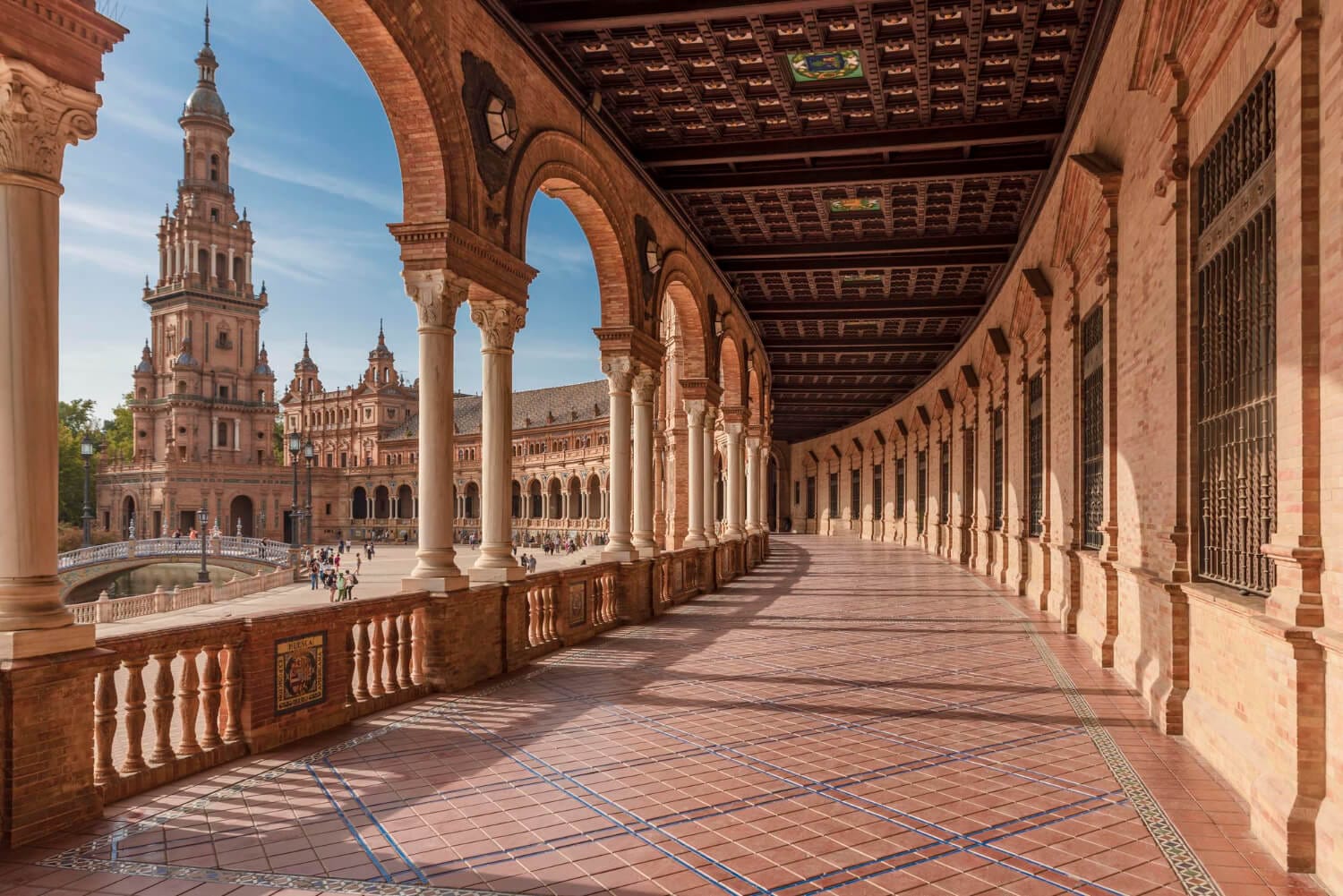
Plaza de España is one of Seville’s most recognizable landmarks, built for the 1929 Ibero-American Exposition. Its sweeping semi-circular design, bridges, and tiled alcoves representing Spain’s provinces make it both grand and approachable.
The plaza is free to visit, and renting a small rowboat on the canal costs roughly €6–8 for 30 minutes. Adjacent Parque de María Luisa offers shaded paths, fountains, and benches — ideal during warmer months.
Metropol Parasol (Las Setas)
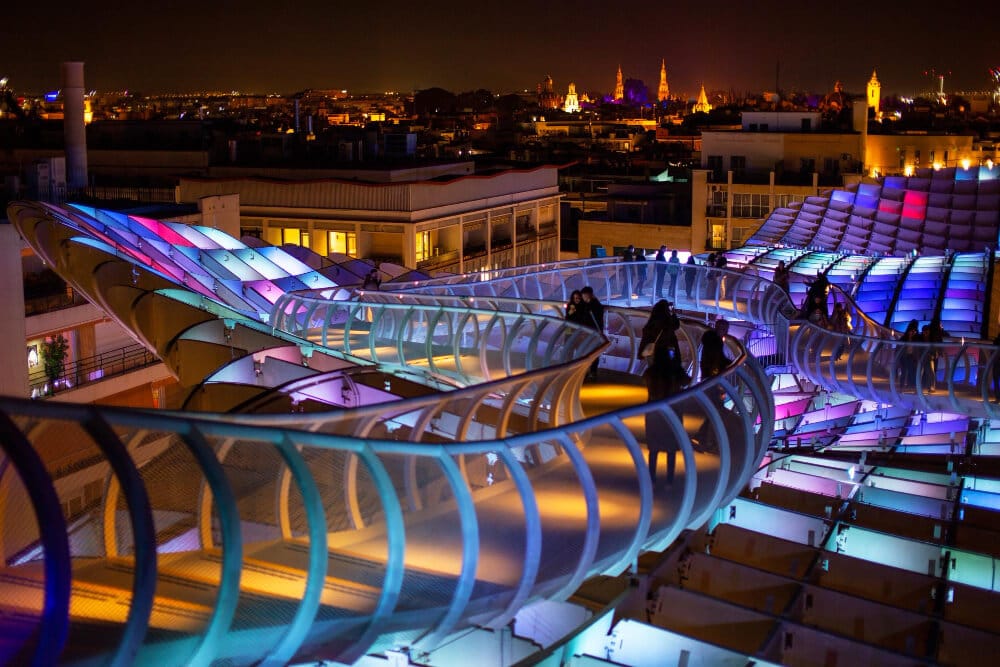
A modern contrast to Seville’s historic skyline, the Metropol Parasol divides opinion but offers excellent views. The rooftop walkway provides a panoramic perspective of the old town.
Tickets cost around €15, which includes access to the viewpoint and an archaeological space below. Sunset is particularly popular, though mornings are quieter.
Food, Tapas, and Local Experiences
Food is central to Seville’s identity, and first-time visitors quickly learn that eating is a social ritual rather than a rushed necessity. Tapas culture encourages sharing, lingering, and moving between places rather than committing to one long meal.
Traditional dishes to look for include jamón ibérico, espinacas con garbanzos (spinach with chickpeas), tortilla española, and fried seafood. Prices vary by location, but typical tapas cost €3–5, while larger raciones range from €8–15.
Markets such as Mercado de Triana or Mercado Lonja del Barranco offer a mix of fresh produce, casual dining, and local atmosphere. Expect to pay slightly more in market stalls, but the quality and experience often justify it.
Flamenco is another essential experience. While street performances can be enjoyable, attending a small tablao offers deeper insight. Intimate shows in Triana typically cost €18–30, depending on venue and inclusions.

Best Time to Visit Seville
Timing matters in Seville more than in many European cities. Spring, particularly March to May, is widely considered the best period. Temperatures are comfortable, orange trees bloom, and major festivals like Semana Santa and Feria de Abril bring the city to life.
Autumn (September to November) offers a similar climate with fewer crowds. Summer is challenging for many visitors, with daytime temperatures often exceeding 40°C (104°F). If visiting in summer, plan sightseeing early in the morning and after sunset, reserving midday for indoor attractions or rest.
Getting Around Seville
Seville’s historic center is ideal for walking, and most first-time visitors rarely need transport within the core areas. For longer distances, public options are reliable and affordable.
Buses and trams operate throughout the city, with single tickets costing around €1.40. Bicycle rentals are popular, thanks to flat terrain and dedicated bike lanes. Taxis are widely available and reasonably priced for short trips, especially late at night.
Day Trips from Seville Without a Car
Seville is an excellent base for exploring Andalusia without renting a car. Regular trains and buses connect the city to nearby towns and major destinations.
Córdoba is reachable in under an hour by high-speed train, with tickets typically €15–30, making it one of the easiest and most rewarding day trips. Carmona, just 30–40 minutes away by bus or train (€4–7), offers hilltop views and historic charm. Ronda and Écija require more time but are still feasible as full-day excursions using public transport.
Tip: Take early departures for day trips. Andalusian towns are best experienced with daylight and fewer crowds.
A Simple First-Time Itinerary
A well-paced first visit to Seville doesn’t require rushing. Two to three days is ideal for most travelers.
One day can be dedicated to Santa Cruz, the Cathedral, La Giralda, and the Alcázar, followed by an evening walk and tapas. A second day allows time for Plaza de España, Parque de María Luisa, Metropol Parasol, and deeper exploration of Triana. A third day can be used for a day trip or a flamenco-focused evening.
Final thoughts
Seville is a city that rewards attention rather than speed. For first-time visitors, its combination of grand landmarks, everyday local life, and manageable scale makes it one of Spain’s most approachable destinations. With thoughtful planning, realistic pacing, and an openness to wandering, Seville reveals itself not as a checklist of attractions, but as a living, breathing city shaped by centuries of culture.
Whether you come for history, food, flamenco, or atmosphere, Seville offers a first impression of southern Spain that lingers long after you leave.
FAQ – Seville Travel
Is Seville safe for first-time visitors?
Yes, Seville is generally safe. Standard precautions apply, especially in crowded areas.
How many days do I need in Seville?
Two to three days cover main attractions, local experiences, and a day trip.
Can I do Seville without a car?
Absolutely. The city is walkable, and nearby villages are accessible via train or bus.
What is the best season to visit?
Spring and fall are ideal for weather and festival experiences. Summer is hot but manageable with early morning and evening plans.
Where should I stay for first-time visitors?
Santa Cruz or El Arenal neighborhoods are central, walkable, and close to major attractions.