
Southern Spain is one of Europe’s most rewarding regions for slow, flexible travel. Andalusia combines dramatic landscapes, layered history, and vibrant local culture — and much of it is accessible without the need for a rental car. Thanks to a well-developed network of trains, regional buses, and walkable historic centers, travelers can explore white villages, coastal cities, and cultural landmarks using public transport alone.
For first-time visitors, this approach removes the stress of driving unfamiliar mountain roads or navigating city traffic, while still allowing access to some of the region’s most memorable destinations. This guide focuses on day trips in southern Spain that are realistic without a car, clearly explaining transport options, approximate costs, and what makes each destination worth your time.
Ronda – Cliffside Drama and Moorish History
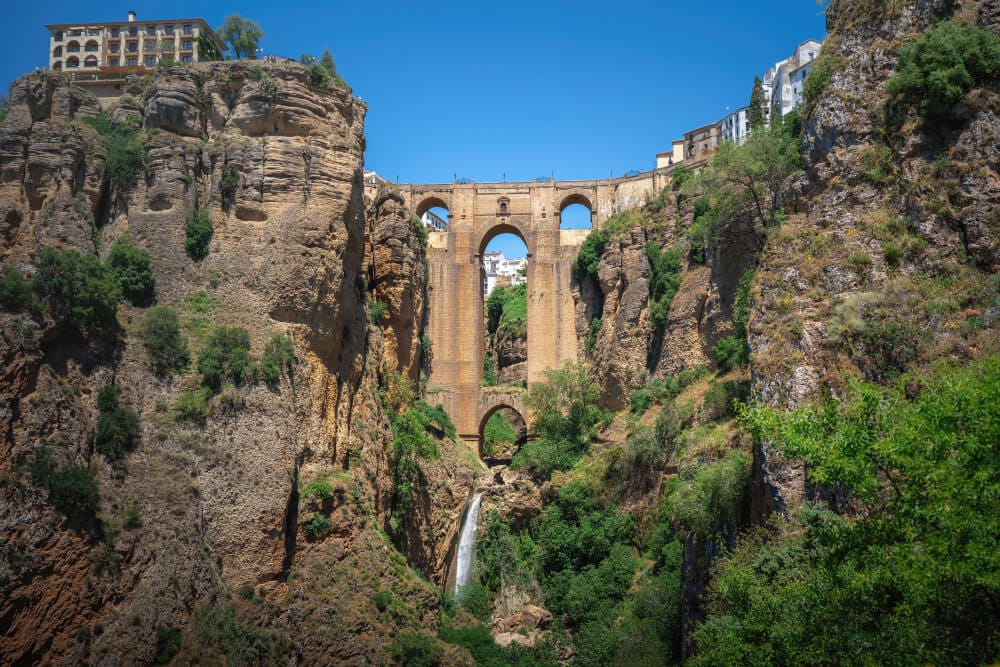
Ronda is often considered the ultimate Andalusian day trip — and it remains one of the easiest to reach without a car. Dramatically positioned above the El Tajo gorge, the town is split by a deep canyon and connected by the iconic Puente Nuevo bridge. The views from the bridge and surrounding viewpoints are among the most striking in southern Spain.
Ronda is directly connected by regional train from Málaga, with a travel time of around 2 hours. One-way tickets usually cost €15–25, depending on time of booking and season. Trains also run from Seville, typically taking around 2.5 hours and costing €18–30.
Once you arrive, Ronda is entirely walkable. Highlights include the historic old town, cliffside walking paths, small plazas, and the Plaza de Toros — one of Spain’s oldest bullrings (entry around €10–13). Even with limited time, the town feels immersive and rewarding.
Tip: Aim for one of the earliest trains. Morning light over the gorge is softer, and you’ll experience Ronda before the main tour groups arrive.
Mijas Pueblo – Hillside Strolls and Coastal Views
Mijas Pueblo sits high above the Costa del Sol, offering classic whitewashed streets paired with panoramic Mediterranean views. Despite its hillside location, it’s surprisingly easy to visit without a car.
From Málaga, take a commuter train or bus to Fuengirola (about 45 minutes, €3–5). From there, frequent local buses climb to Mijas Pueblo in around 20 minutes, with tickets typically €1.50–2.50 each way. The full journey rarely exceeds 1.5 hours.
Mijas Pueblo is compact and ideal for a relaxed half-day visit. Wander through cobbled alleys, browse small artisan shops, and stop at a café terrace overlooking the sea. While the village is popular, especially midday, its charm remains intact if you slow down and explore side streets.
Because of its proximity to the coast, Mijas can be easily combined with Fuengirola or Marbella, creating a varied day trip that blends mountain atmosphere with beachside energy.

Frigiliana – Flowers, Tiles, and Photogenic Lanes
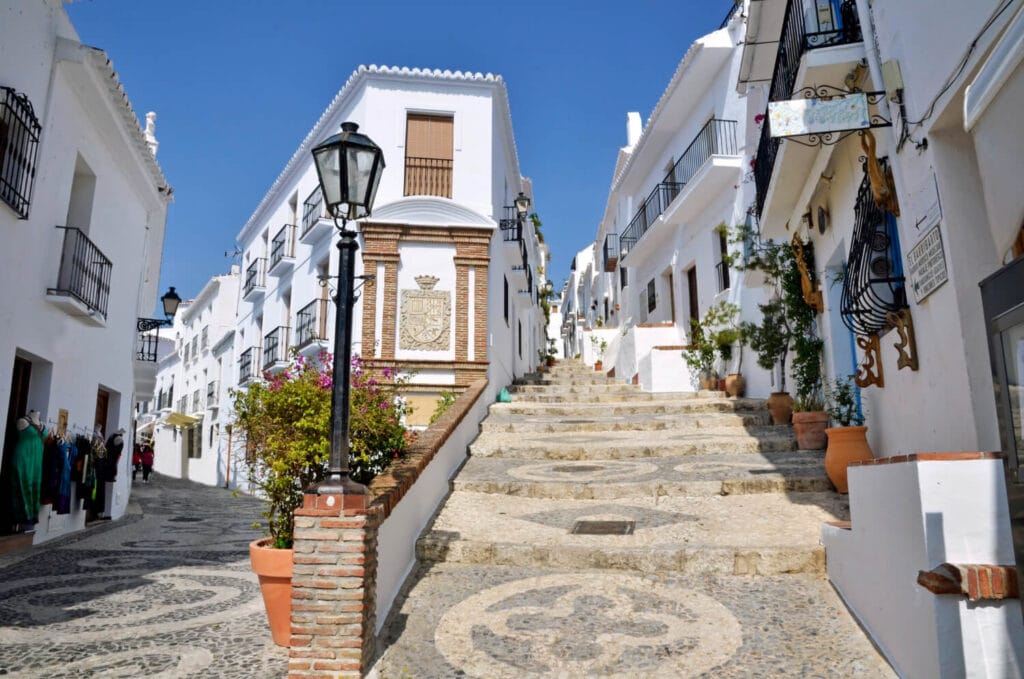
Frigiliana consistently ranks among the most beautiful villages in Spain, and it’s also one of the most accessible without a car. Its steep, winding streets are lined with white houses decorated with colorful tiles and flower pots, reflecting the village’s Moorish heritage.
To reach Frigiliana, take a bus from Málaga to Nerja (approximately 1.5 hours, €6–8). From Nerja, local buses connect to Frigiliana in about 15 minutes, with tickets usually €1–2. The bus stop sits at the edge of the village, making access straightforward.
Frigiliana is best explored on foot. As you climb higher, crowds thin out, and views open over the surrounding hills and, on clear days, toward the Mediterranean. Small bakeries, local wine shops, and cafés give the village a lived-in feel rather than a museum-like atmosphere.
Tip: Wear sturdy shoes and plan to walk uphill. The effort is rewarded with quieter streets and the best viewpoints.
Granada and the Alhambra – Cultural Depth by Train
Granada is one of the most culturally rich destinations in southern Spain, and it’s exceptionally well connected by train. From Málaga, high-speed and regional trains reach Granada in around 1.5 hours, with tickets typically €20–40 depending on speed and availability. Trains from Córdoba and Seville are similarly convenient.
The highlight of any visit is the Alhambra, a vast palace complex that blends Islamic architecture, gardens, and city views. Entry tickets cost approximately €14–19, depending on the areas included. Tickets sell out regularly, so booking in advance is essential — even for day-trippers.
Beyond the Alhambra, Granada’s Albaicín district offers narrow streets, viewpoints, and traditional tea houses. The city center is compact, making it easy to explore between train schedules. Many visitors are surprised by how much they can see in a single day without feeling rushed.
Cádiz – Coastal Charm Without the Car
Cádiz is one of Europe’s oldest continuously inhabited cities, and its compact layout makes it ideal for a car-free visit. Located on a narrow peninsula along the Atlantic coast, Cádiz is well connected by train from Seville, with travel times of around 1.5 hours and ticket prices typically €15–25.
The historic center is flat and walkable, filled with lively plazas, old churches, and colorful streets. Walking along the seaside promenade offers sweeping ocean views, while nearby beaches such as La Caleta provide a relaxing contrast to sightseeing.
Cádiz works especially well as a slower-paced day trip. Rather than rushing between landmarks, it rewards wandering, people-watching, and long lunches. Combined with its strong train connections, it’s one of the easiest and most satisfying southern Spain day trips without a car.
Seville Surroundings – Carmona, Osuna, and Écija
Seville is an excellent base for exploring smaller towns in Andalusia, many of which are reachable by short bus or train journeys. Carmona, Osuna, and Écija each offer a different slice of regional life, without the crowds found in larger cities.
Carmona is the closest, reachable by train or bus in about 30–40 minutes, with tickets usually €4–7. Its hilltop location, historic walls, and quiet plazas make it an easy half-day escape from Seville.
Osuna, around 1.5 hours away by train (€8–15), is known for its grand collegiate church and wide, elegant streets. Écija, often called the “city of towers,” can be reached in a similar time frame and offers baroque architecture and a more local atmosphere.
These towns are ideal for travelers who want variety without changing accommodation. Each is compact, walkable, and suited to a relaxed day trip.
How to Plan Southern Spain Day Trips Without a Car
Planning car-free day trips in southern Spain is largely about choosing the right base and understanding transport rhythms. Major cities like Málaga, Seville, and Granada act as hubs, with frequent connections to nearby towns and villages.
Regional bus companies such as ALSA connect coastal areas, white villages, and inland towns. Ticket prices are generally affordable, ranging from €1 to €15 for most day-trip routes. Trains are faster and more comfortable for longer distances but can cost more if booked last minute.
Scheduling matters. Rural routes may run only a few times per day, so checking timetables in advance avoids long waits. Combining nearby destinations — such as Nerja with Frigiliana or Seville with Carmona — helps maximize limited time.
Tip: Always check the return schedule before you leave. Some villages have fewer afternoon or evening buses, especially on weekends.
Final thoughts
Southern Spain proves that you don’t need a car to experience its most memorable destinations. With trains and regional buses, travelers can reach dramatic villages like Ronda, photogenic towns like Frigiliana, cultural centers like Granada, and coastal gems like Cádiz — all as rewarding day trips.
By choosing the right base, planning transport carefully, and focusing on walkable destinations, you gain access to Andalusia’s diversity without the stress of driving. The result is a slower, more immersive way to explore the region — one that highlights landscapes, history, and local life rather than logistics.
FAQ – Day Trips in Southern Spain
Can you do these trips without a car?
Yes, most are accessible by regional buses or trains from Málaga, Granada, or Seville.
How many villages can you see in a single day?
One or two is realistic to avoid rushing.
Which village is best for photography?
Frigiliana and Ronda offer the most dramatic views and photogenic streets.
Is public transport reliable?
Yes, but check schedules in advance, especially for rural routes.