Paris is one of those cities that feels instantly familiar yet endlessly surprising. Iconic landmarks rise above quiet streets, grand museums sit beside everyday cafés, and even a short walk can feel cinematic. For first-time visitors, the challenge is not what to see, but how to see Paris without rushing through it.
This carefully paced 3-day Paris itinerary is designed to balance must-see attractions with walkable neighborhoods, hidden corners, and time to simply enjoy the city’s rhythm. It’s ideal for couples, culture lovers, and travelers who want a meaningful first impression of Paris rather than a checklist experience.
Day 1: Classic Landmarks and Iconic Views
Your first day should establish context. Paris is dense with history, and starting with its most recognizable landmarks helps you orient yourself geographically and emotionally.
Eiffel Tower: Seeing Paris from Above
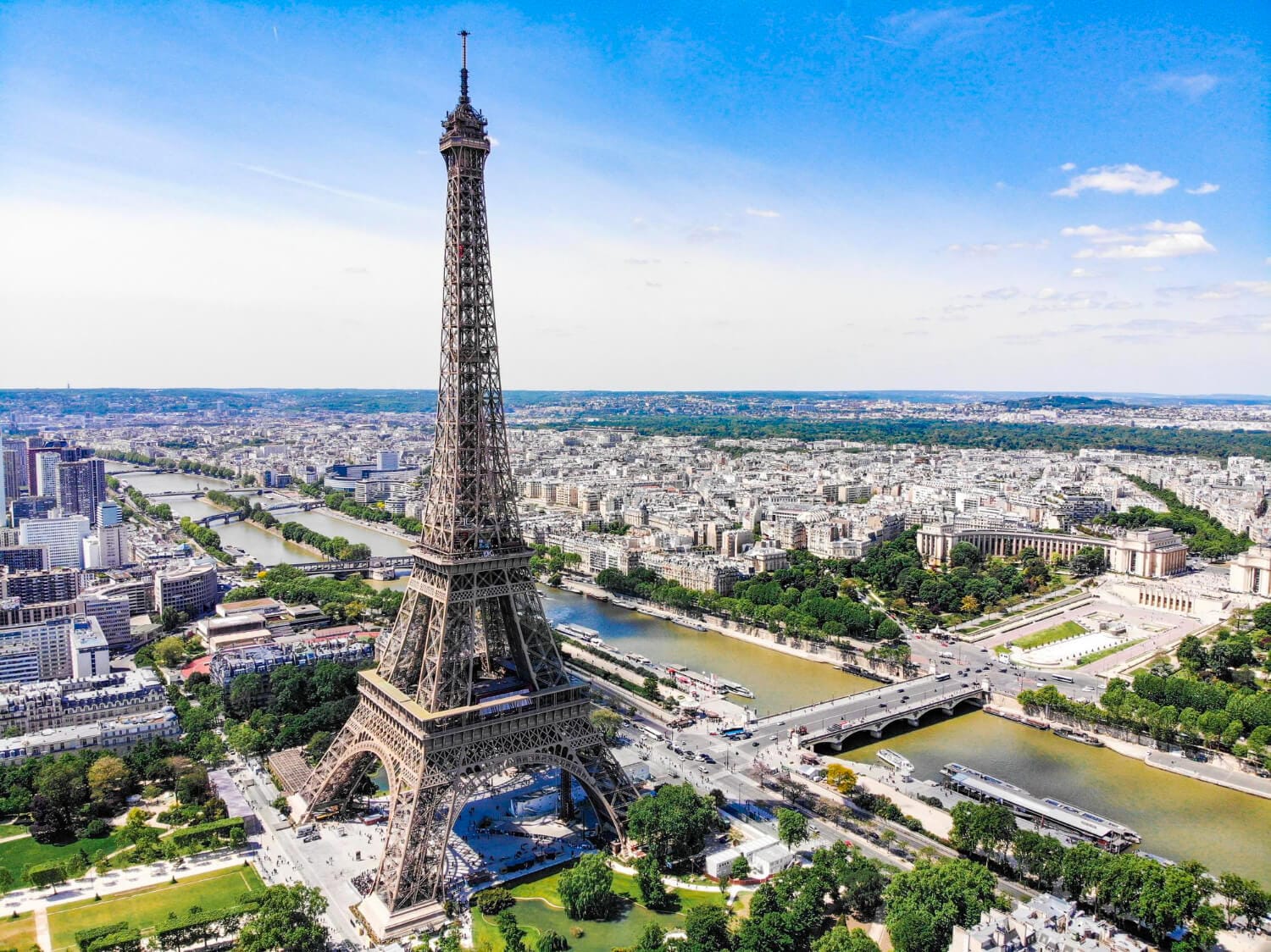
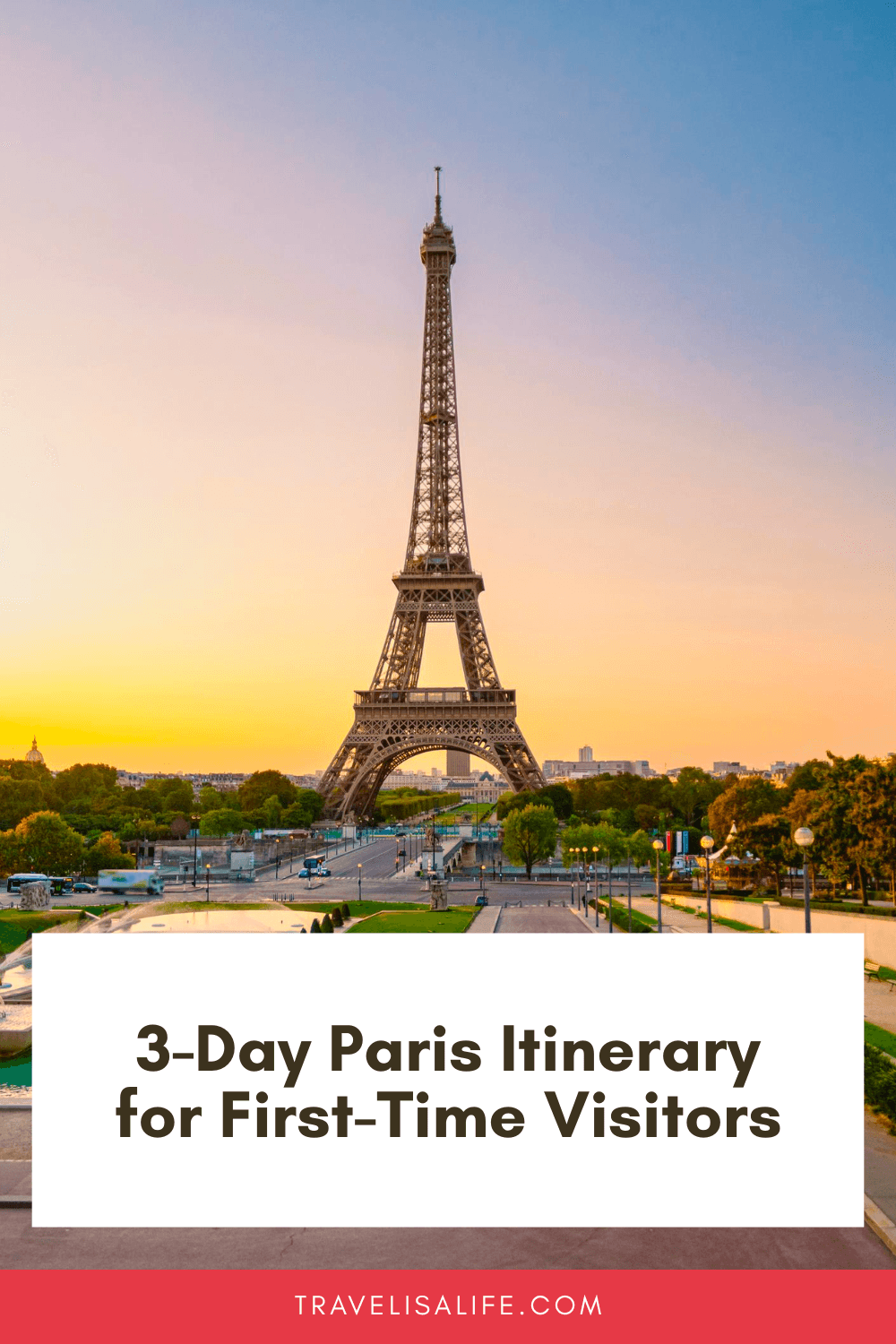
Begin the day at the Eiffel Tower, ideally in the early morning. Crowds build quickly after mid-morning, and the experience feels very different when the Champ de Mars is still quiet.
Ticket prices:
- 2nd floor by elevator: approximately €19–€21
- Summit by elevator: approximately €28–€30
- Stairs to 2nd floor + elevator to summit: approximately €22–€23
Tickets should be booked in advance directly through the official site whenever possible. While you can admire the tower from below for free, going up provides context: Paris’s compact layout, the curve of the Seine, and the way neighborhoods flow into one another become immediately clear.
Tip: If heights are not essential for you, consider skipping the summit and saving both time and money. The city views from bridges and hills later in the trip are equally memorable.
Champ de Mars: A Slow Transition
After the tower, walk through the Champ de Mars gardens. This open space allows you to decompress after travel and adjust to Paris’s rhythm. It’s also an ideal place to observe everyday life—morning joggers, school groups, and locals walking dogs.
No tickets, no schedule, no pressure. This is an intentional pause before diving into museums.
Louvre Museum: Depth Over Coverage
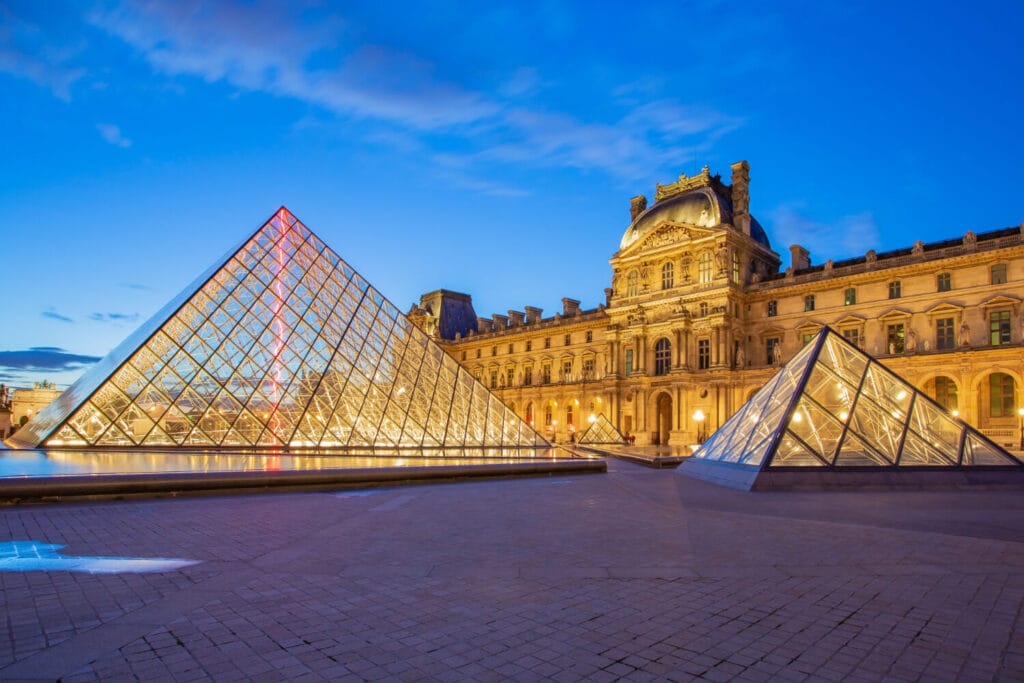
The Louvre is not a museum you “finish.” It is a space you sample deliberately.
Entrance price:
- Non-EU visitors: €32
- Free for EU residents under 26
- Paris Museum Pass accepted
If you plan to visit several museums during your stay, a Paris Museum Pass can make sense:
- 2-day pass: approximately €62
- 4-day pass: approximately €77
Inside the Louvre, choose one or two departments—Italian Renaissance painting, French decorative arts, or Egyptian antiquities—and stay focused. Seeing the Mona Lisa is optional; understanding the scale and ambition of the museum is not.
Tip: Enter through the Carrousel du Louvre entrance if possible. It is often less crowded than the pyramid.
Evening Seine River Cruise
End your first day with a Seine River cruise. After hours of walking, this is a restful way to see Paris illuminated.
Typical prices:
- Standard 1-hour sightseeing cruise: €15–€30
- Dinner cruises: €60–€120+
A simple sightseeing cruise is sufficient for most first-time visitors. You’ll pass Notre-Dame, the Louvre, and several historic bridges, all from a calm perspective that contrasts beautifully with the busy streets.
Day 2: Neighborhoods and Hidden Gems
Day two is about understanding how Paris lives. Neighborhoods reveal far more than monuments.
Le Marais: History Without Formality
Le Marais is one of the best areas for unstructured exploration. Medieval street layouts, historic mansions, and modern boutiques coexist naturally.
Place des Vosges, the city’s oldest planned square, is a highlight. Unlike grand monuments, it invites sitting, people-watching, and quiet conversation.
Rue Crémieux: A Short but Memorable Detour
This colorful residential street is small and often overlooked by itinerary planners. Visit respectfully and briefly—early in the day if possible—to enjoy its charm without disturbing residents.
Saint-Germain-des-Prés: Café Culture in Context
Saint-Germain is closely associated with writers, philosophers, and postwar intellectual life. Cafés here are not attractions—they are institutions.
Expect café prices of €6–€9 for coffee, higher than elsewhere, but the value lies in the atmosphere. Sitting for an hour with a coffee and watching the street is part of Parisian culture, not wasted time.
Tip: Order slowly and stay longer. In Paris, lingering is normal and appreciated.
Canal Saint-Martin: A Different Paris
In the afternoon, walk along Canal Saint-Martin. This area feels younger, quieter, and less formal than central Paris. Independent shops, book stores, and relaxed cafés make it ideal for wandering without a plan.
For travelers interested in discovering places beyond the obvious, this is where Paris begins to feel personal rather than touristic.
For more ideas on local streets and less crowded neighborhoods, see Things to Do in Paris – Classic Highlights & Local Secrets, which complements this itinerary with deeper exploration options.
Day 3: Food, Views, and Montmartre
Your final day blends food culture, elevated views, and one of Paris’s most atmospheric districts.
Marché des Enfants Rouges: Casual, Local Dining
Parisian food culture is not limited to fine dining. Marché des Enfants Rouges, the city’s oldest covered market, offers an authentic and affordable food experience.
Typical prices:
- Street-style meals or plates: €6–€15
- Sit-down counters: €15–€20
This is an excellent place for a late breakfast or early lunch before heading uphill.
Montmartre: Beyond the Postcards
Montmartre can feel overly touristy if approached carelessly. The key is timing and route choice.
Visit in the late morning or early afternoon. Walk uphill through residential streets rather than taking direct routes filled with souvenir stalls.
Sacré-Cœur Basilica:
- Entry: Free
- Dome access (optional): approximately €6
The view from the steps alone is sufficient for most visitors. The surrounding streets, staircases, and small squares offer far more character than the basilica interior.
Tip: Step away from Place du Tertre and explore nearby side streets. The atmosphere changes dramatically within one block.
Promenade Plantée: A Quiet Finish
The Promenade Plantée, an elevated green walkway built on an old railway line, provides a peaceful contrast to Montmartre’s energy.
It is free, scenic, and rarely crowded—ideal for reflection and unwinding after three active days.
Classic Bistro Dinner
For your final evening, choose a traditional neighborhood bistro rather than a tourist-focused restaurant.
Typical dinner costs:
- Main course: €18–€30
- Three-course meal with wine: €35–€55 per person
The goal is not perfection but atmosphere—small tables, simple menus, and unhurried service.
Practical Travel Tips for First-Time Visitors
Transportation:
A 3-day public transport pass costs approximately €26–€28 and covers metro, buses, and trams within central Paris.
Walking Expectations:
Expect to walk 15,000–20,000 steps per day. Comfortable shoes are essential.
Weather:
Paris weather is unpredictable year-round. Bring layers and a compact umbrella.
Language:
Basic French greetings significantly improve interactions. Politeness matters more than fluency.
Pacing:
Limit each day to one major activity and several flexible ones. Overplanning is the most common mistake.
Tip: Carry a small power bank. Navigation, photos, and transit apps drain batteries quickly in Paris.
Final thoughts
Three days in Paris is not about seeing everything—it’s about seeing enough to understand why the city endures in memory long after you leave. This itinerary prioritizes balance: landmarks without exhaustion, neighborhoods without pressure, food without formality, and moments without schedules.
By combining iconic sights with walkable districts, quiet spaces, and realistic timing, Paris becomes approachable rather than overwhelming. Follow this structure, but allow yourself to deviate. Some of the most memorable moments will happen when you sit longer than planned, take a wrong turn, or pause without a reason.
Paris does not reward speed. It rewards attention.